
Faithful Reproduction vs. Influenced Creation
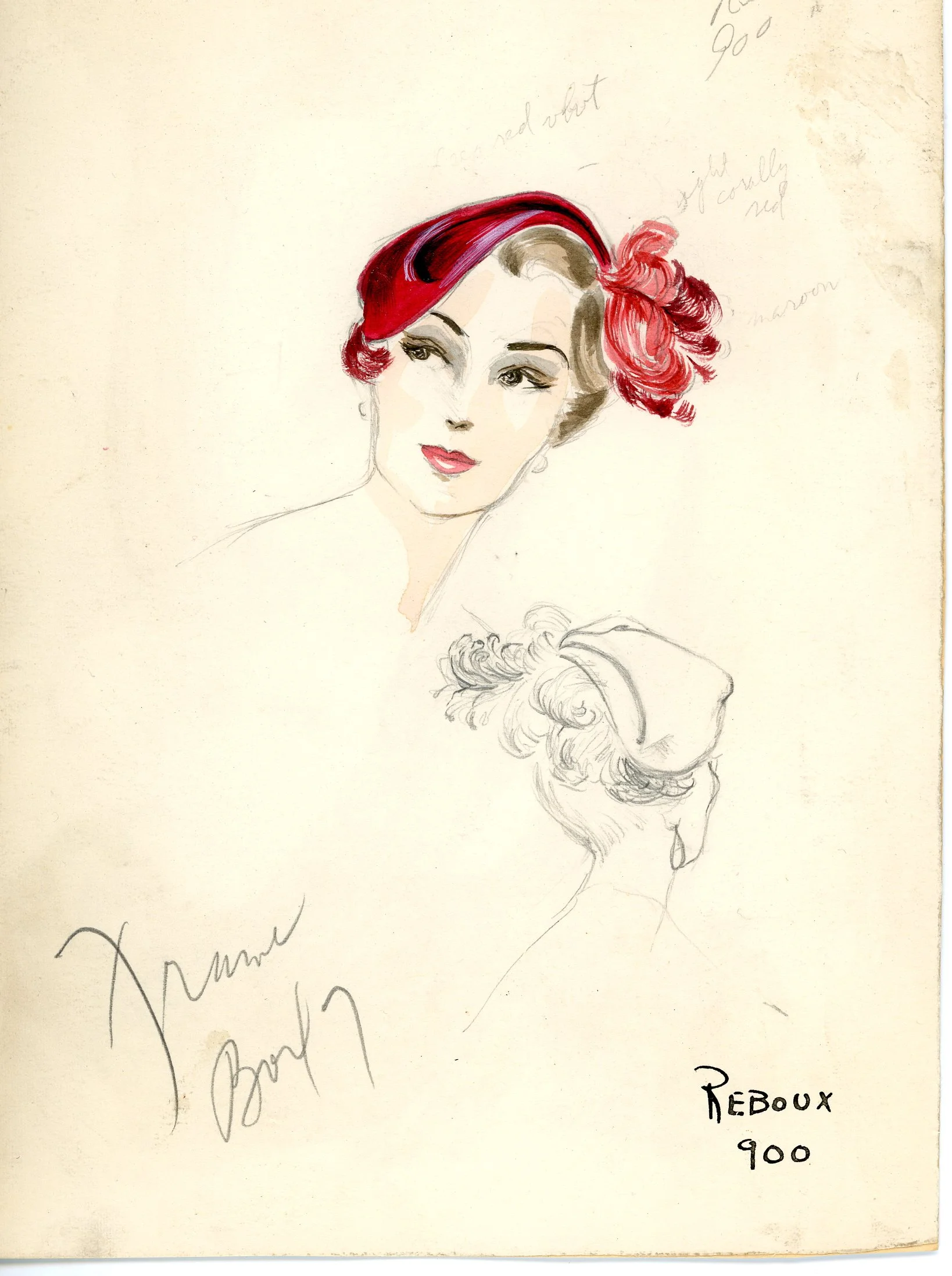
The millinery sketches in the Bergdorf Goodman Archives were most likely used by the store’s custom salon to reproduce licensed copies. This was a common practice until the 1960s and benefited both retailer and consumer: Parisian fashion could be reproduced locally and legally, offering prestige at a fraction of the cost.
Each season, buyers traveled to Paris to view the couture collections and select styles for their American clients. The New Yorker noted that Odna Brandeis, head designer and buyer for the millinery salon, “went wild among the Paris milliners and brought home some astounding hats.”
Bergdorf Goodman would purchase a physical sample, known as a “bonded model,” along with the référence, a list of the materials and other items needed to faithfully copy it, including where to source them.
by Laura Del Villaggio
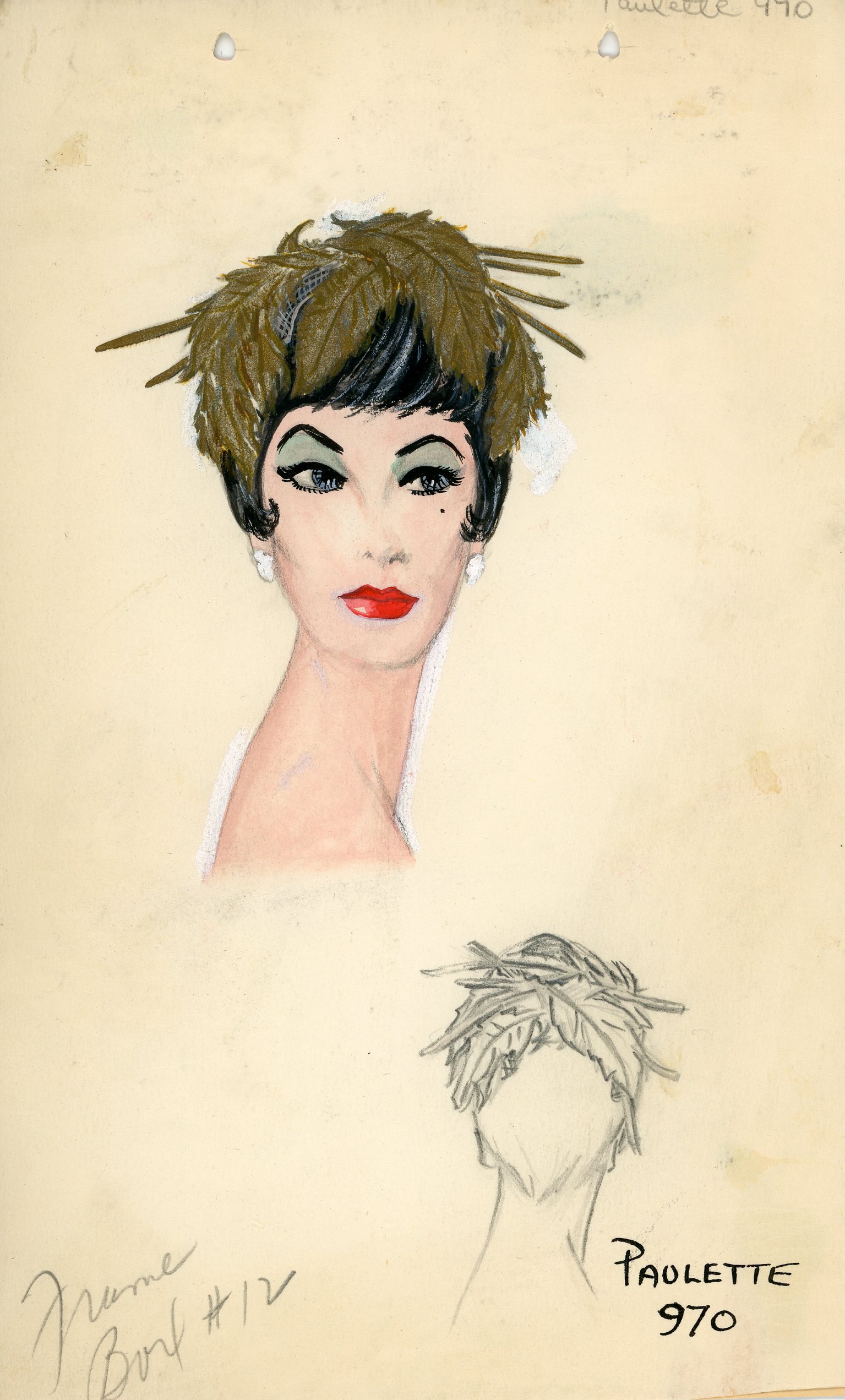
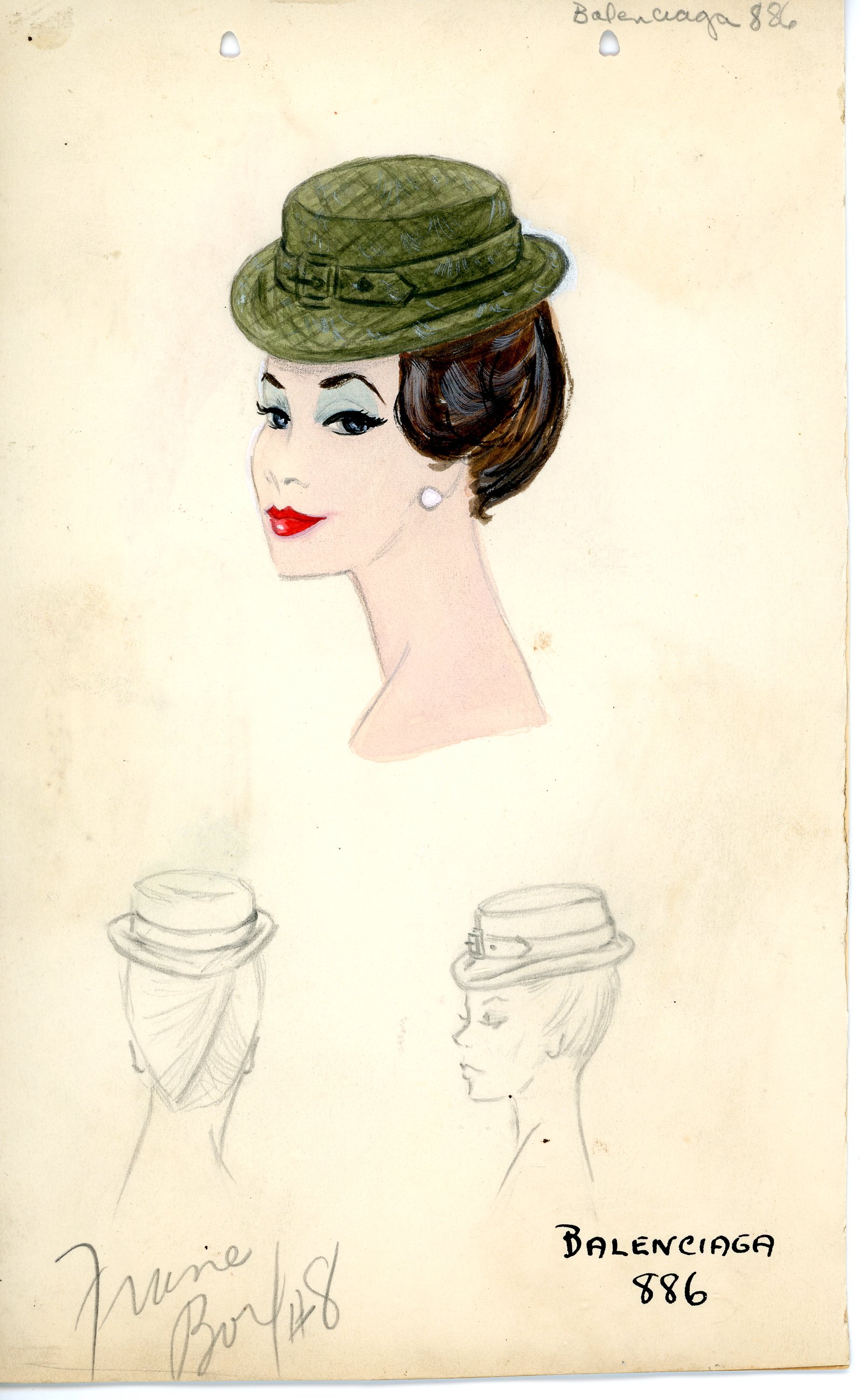
Three Milliners Guild members took on the challenge of reproducing the hat shown in their selected sketch, as well as creating an original hat influenced by it. Viewed together, the results reveal the difference between reproducing a fashion object and using it as a point of departure.
The contemporary milliner’s role in the creative process depends on their area of specialization. A milliner may work closely with a costume designer on a hat for film or theater, or with a fashion designer on a runway headpiece. The designer establishes the vision, and the milliner brings it to life, usually with limited room for artistic interpretation.
Other milliners begin with their own ideas and guide every stage of the process, from sketching and sourcing materials to blocking and trimming. Inspiration can come from anywhere, but when referencing an existing design – whether a fascinator featured in a fashion editorial or a historical hat in a museum or archive – it is important to make the work one’s own. Unlicensed copying can raise ethical and legal concerns. Drawing on one or two key elements of their Bergdorf Goodman sketches, each Milliners Guild member created an original hat. Viewed side by side, the relationship in color or form is apparent, but the designs are not duplicated.
The Milliners
-
Katie Allen
Lifted Millinery
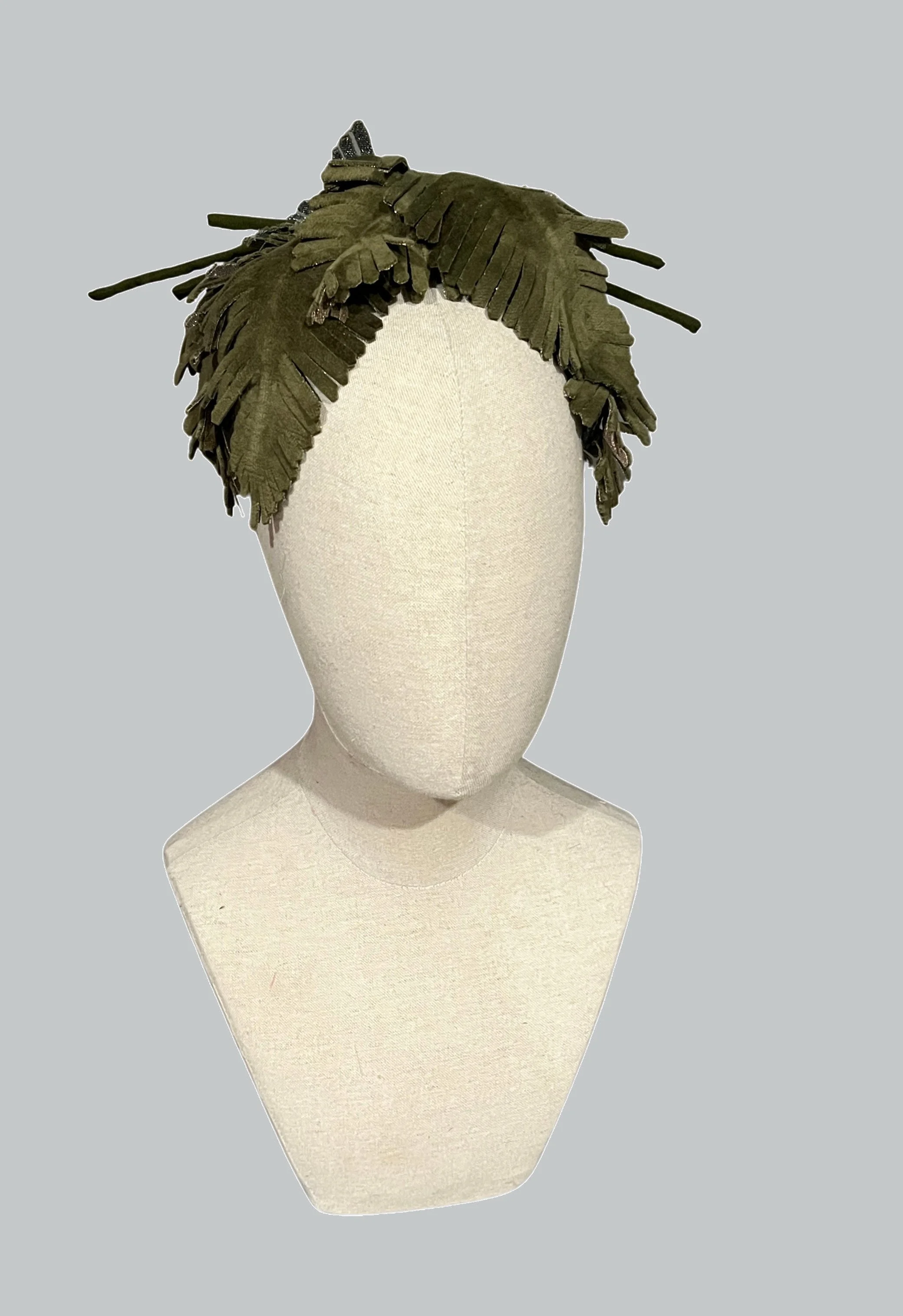
Materials used: millinery wire, vintage lace net, Petersham ribbon, velvet, metallic jersey knit, matte satin weave ribbon.
I adore Madame Paulette’s work but something about the look of a little pile of leaves (or feathers) plopped on a lady’s head in the sketch gave me pause and made me want to give it more life and movement. I envisioned a hat where the leaves (or feathers) were suspended and floating around the wearer’s head in a half halo. The golden color comes from my desire to have a little more glitz added to the original hat to perk it up and I couldn’t resist backing all the leaves of the reproduction in a sheer metallic gold fabric for a little extra depth.
-
Mela Hoyt-Heydon
Atelier Mela
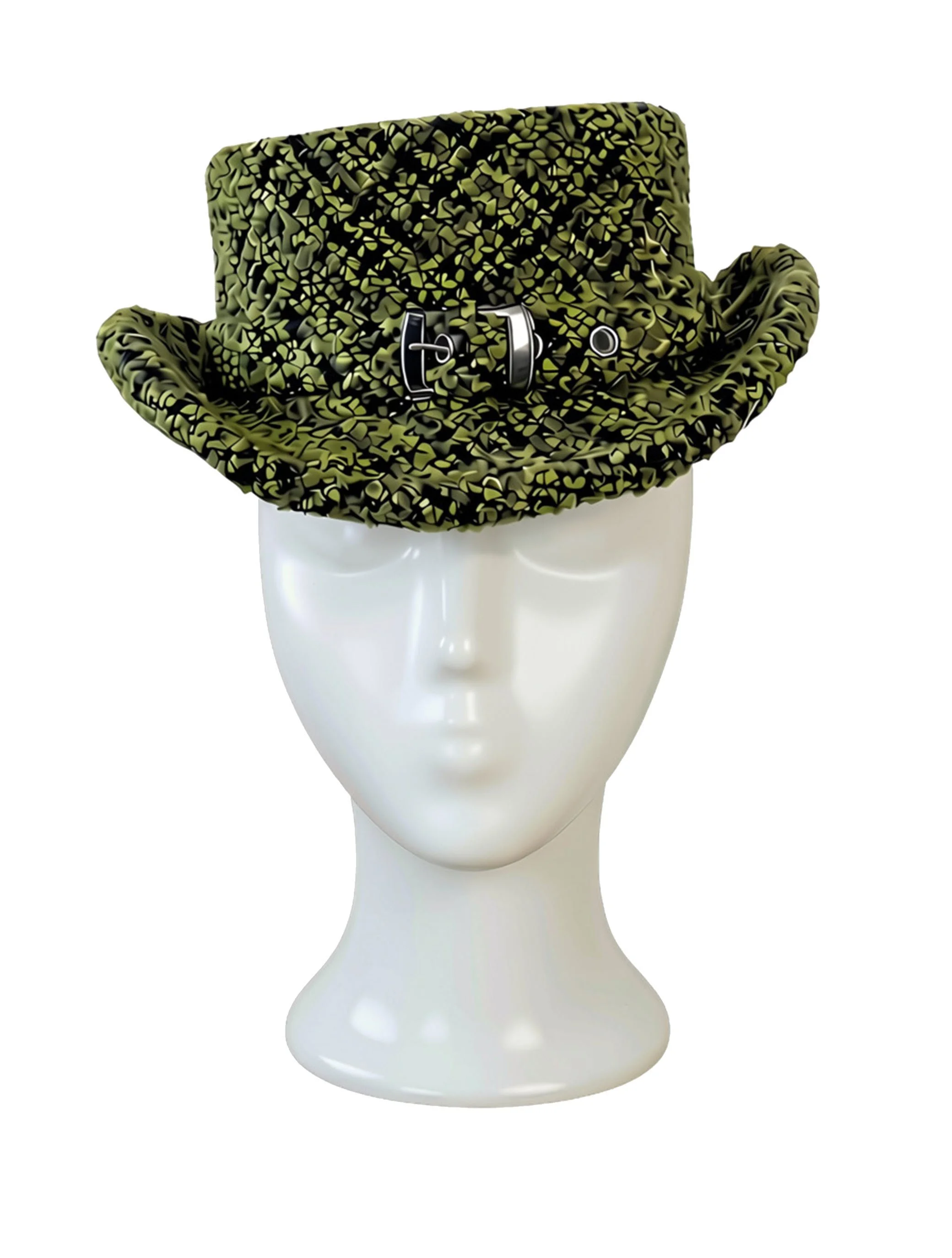
Materials used: buckram base, ice wool, wool boucle, sinamay, vintage plastic buckle
I wanted to interpret the sketch as a model milliner might have done working in a millinery workroom during the 1950/60s. The sketch had the hat sitting high on the head, so I used a size 21 head size block. The brim was blocked separate from the crown. Both the crown and the brim were then wired and mulled by hand before being covered with the boucle fabric cut on the bias, as per the sketch. They were then joined by hand.
A belt trimming made from sinamay, and the fashion fabric had three grommets added along with a vintage plastic buckle before being attached around the outer head size. The hat was lined by silk and as I was making it like a model millinery, no sweatband was added, simply the label in the crown.
-
Michael McCants
McCants Originale fine Millinery
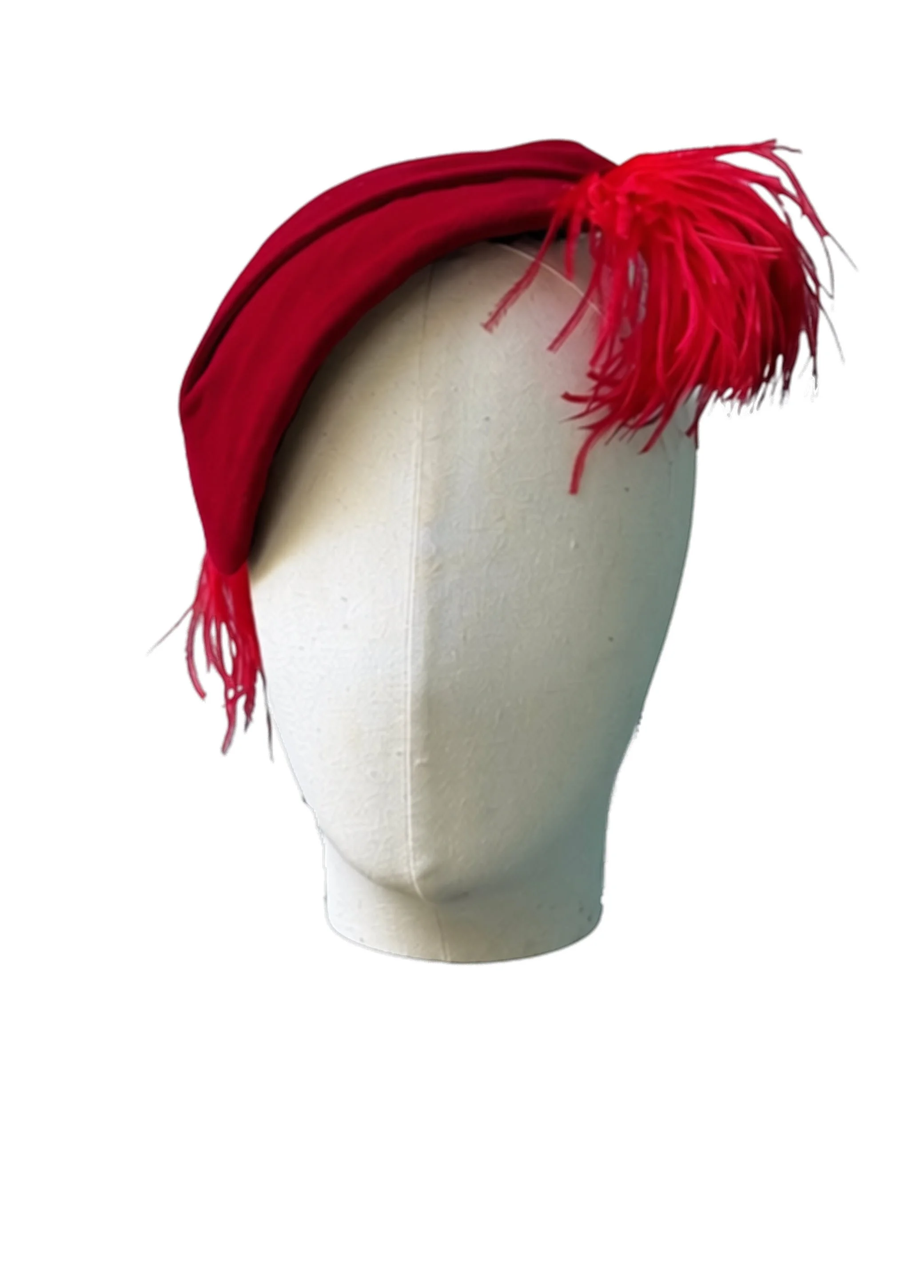
French Milliner Caroline Reboux Revolutionised women’s headwear through her innovative approaches to structure, ornamentation and style. This earned her the title “ Queen of the milliners “ for over 5 decades of creative leadership. She is also credited as one of the first milliners to use veiling in her creations.