
Faithful Reproduction vs. Influenced Creation
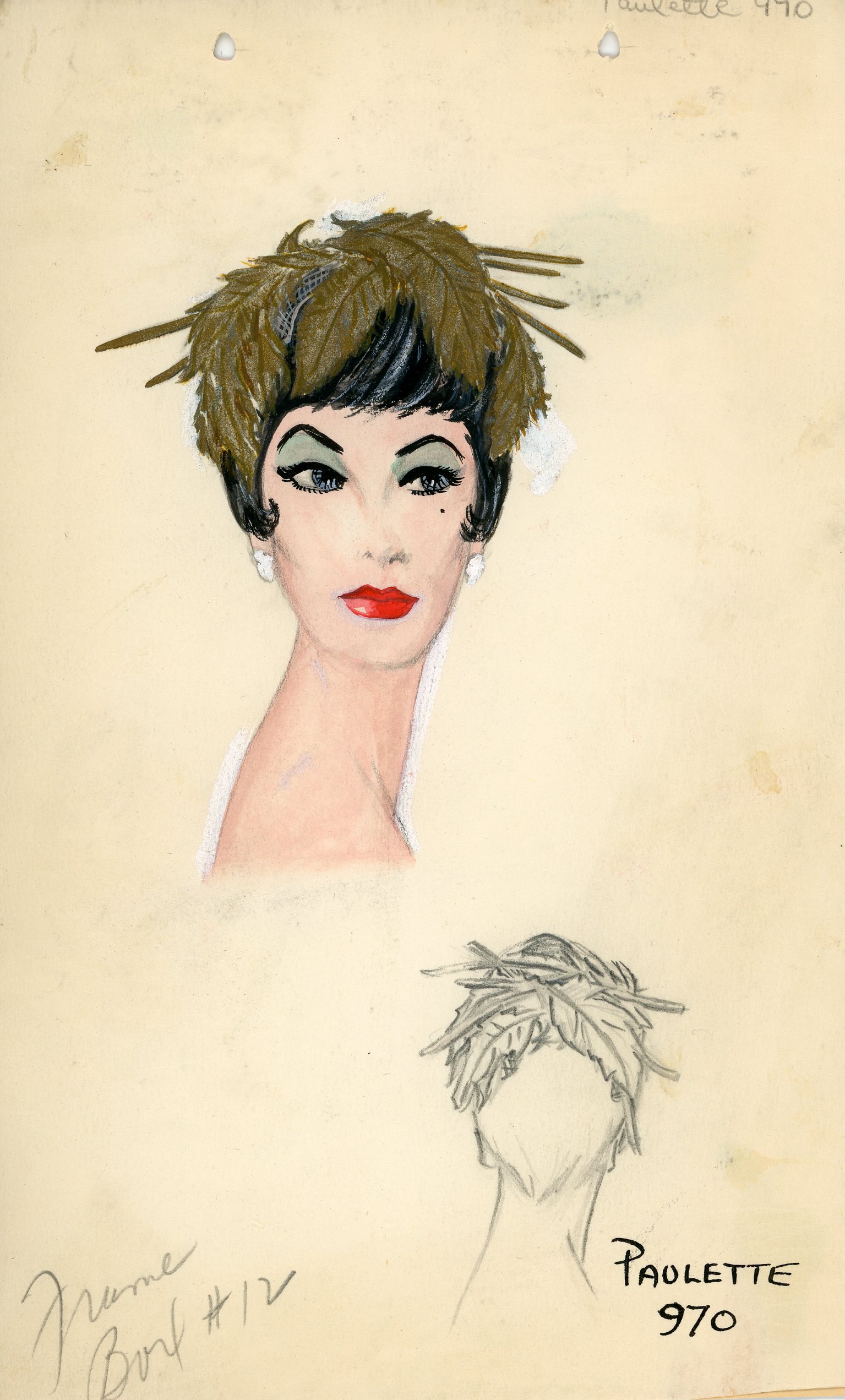
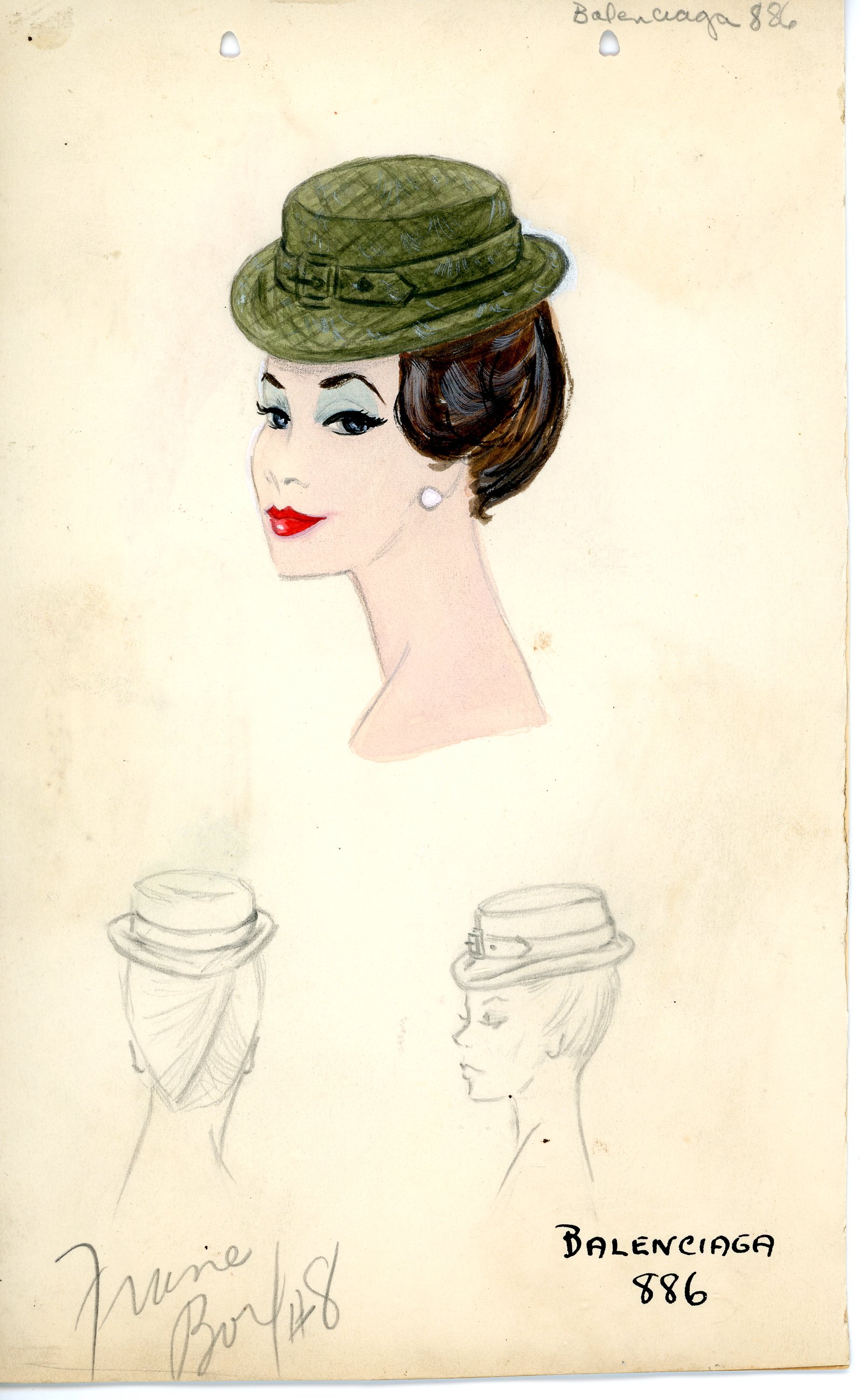
The millinery sketches in the Bergdorf Goodman Archives were most likely used by the store’s custom salon to reproduce licensed copies. This was a common practice until the 1960s and benefited both retailer and consumer: Parisian fashion could be reproduced locally and legally, offering prestige at a fraction of the cost.
Each season, buyers traveled to Paris to view the couture collections and select styles for their American clients. The New Yorker noted that Odna Brandeis, head designer and buyer for the millinery salon, “went wild among the Paris milliners and brought home some astounding hats.”
Bergdorf Goodman would purchase a physical sample, known as a “bonded model,” along with the référence, a list of the materials and other items needed to faithfully copy it, including where to source them.
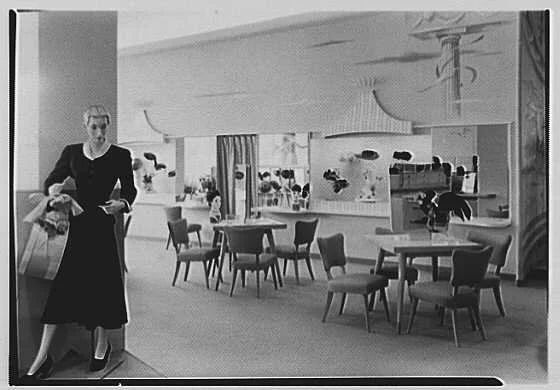
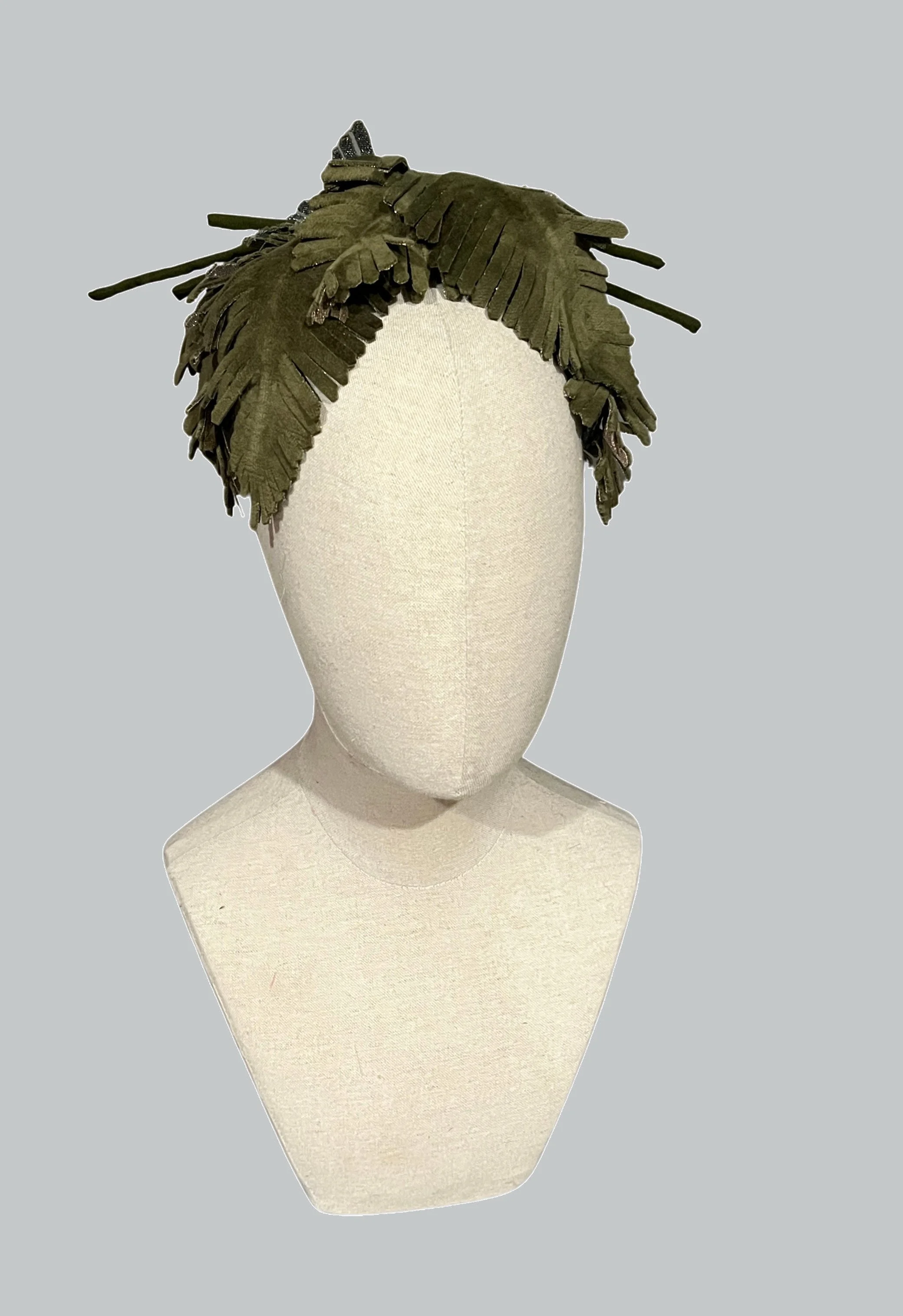
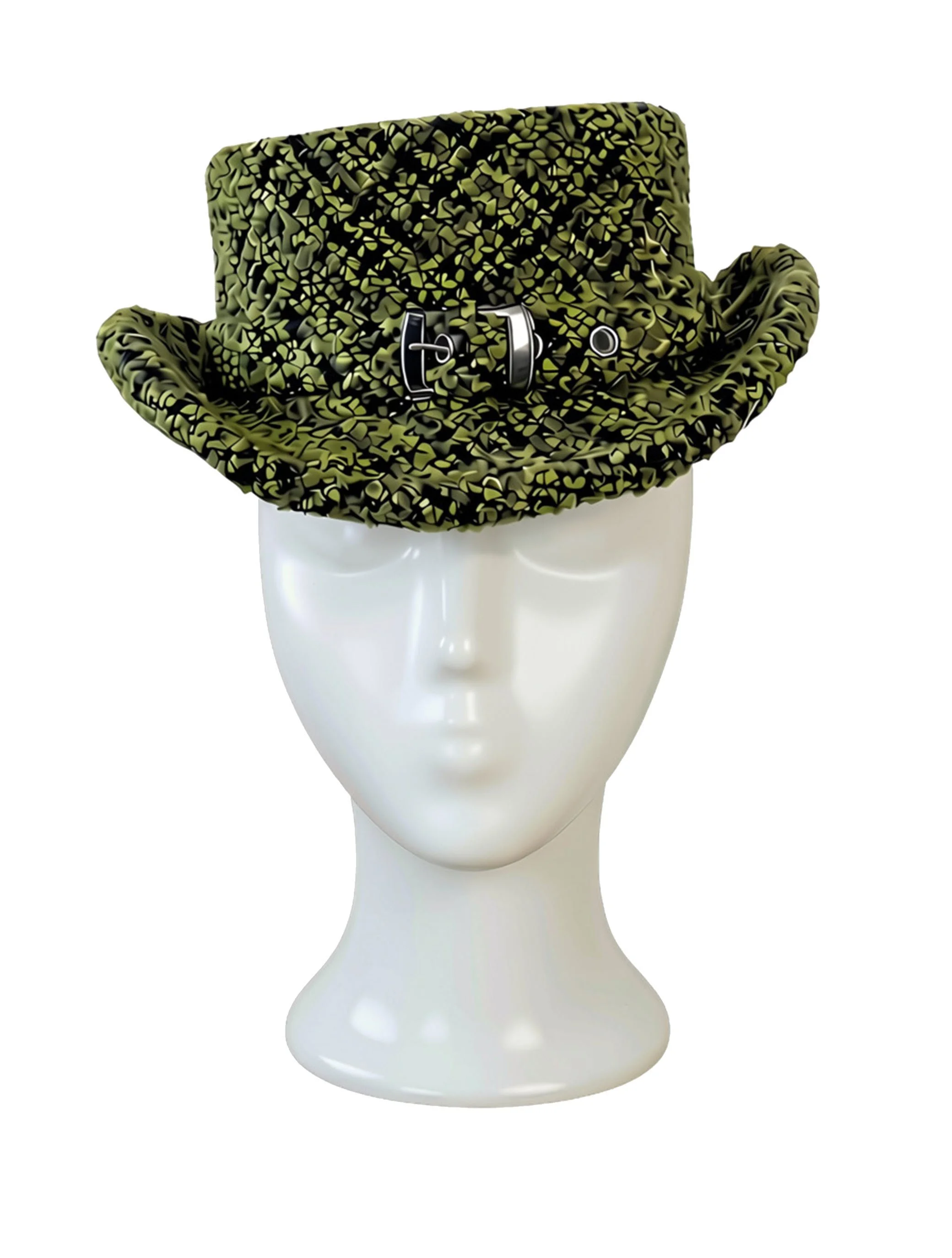
Three Milliners Guild members took on the challenge of reproducing the hat shown in their selected sketch, as well as creating an original hat influenced by it. Viewed together, the results reveal the difference between reproducing a fashion object and using it as a point of departure.
The contemporary milliner’s role in the creative process depends on their area of specialization. A milliner may work closely with a costume designer on a hat for film or theater, or with a fashion designer on a runway headpiece. The designer establishes the vision, and the milliner brings it to life, usually with limited room for artistic interpretation.
Other milliners begin with their own ideas and guide every stage of the process, from sketching and sourcing materials to blocking and trimming. Inspiration can come from anywhere, but when referencing an existing design – whether a fascinator featured in a fashion editorial or a historical hat in a museum or archive – it is important to make the work one’s own. Unlicensed copying can raise ethical and legal concerns. Drawing on one or two key elements of their Bergdorf Goodman sketches, each Milliners Guild member created an original hat. Viewed side by side, the relationship in color or form is apparent, but the designs are not duplicated.